
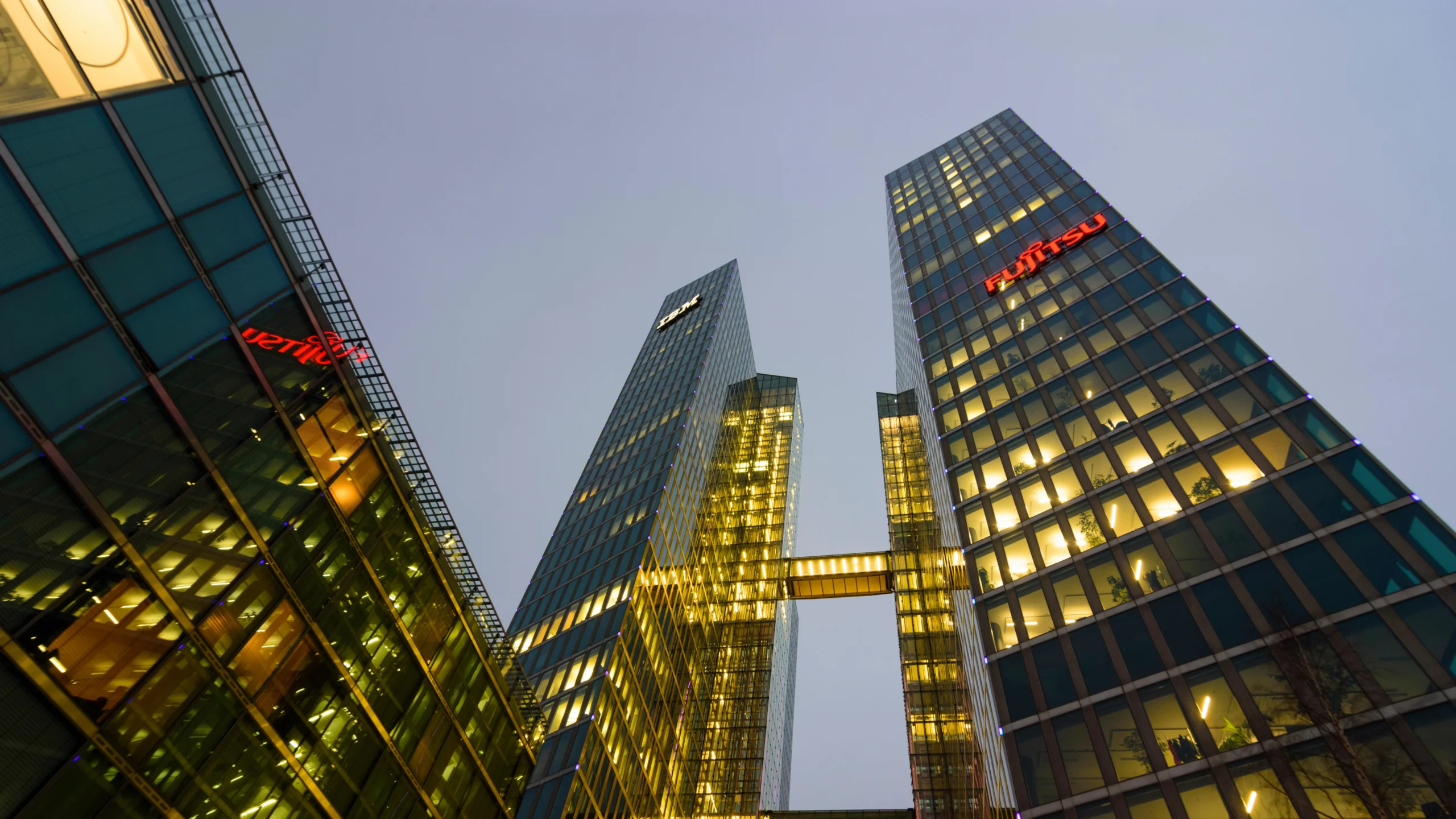
Fujitsu Germany GmbH
The Corporate Digital Unit of Fujitsu Germany GmbH faced a short-term strategic challenge, as the data center previously used for business-critical IT systems, including highly available globally used SAP landscapes, was no longer available. The migration had to be carried out within a few months, without interrupting ongoing business operations and in parallel with other transformation initiatives. At the same time, Fujitsu pursued the goal of relocating the existing infrastructure, modernizing it structurally, and transferring it to a future-proof, standardized, and scalable platform.
Challenges
The initial situation was characterized by a combination of time pressure, high complexity, and critical system dependency:
- Loss of a central data center while maintaining business-critical operations
- Tight, non-extendable time frame
- Highly critical, globally used SAP production systems with no tolerance for downtime
- Parallel transformation projects, including cloud initiatives
- High requirements for security, audit compliance, and documentation
At the same time, the migration was intended not only to be technical but also to be used specifically for the sustainable improvement of efficiency, standardization, and operational structure.
Solution
Fujitsu engaged Manage Now for the complete transition, transformation, and subsequent operation of all relevant systems in aManaged Sovereign Cloud. The focus was on the migration and establishment of a highly standardized, automated, and scalable service platform as the new operational foundation. The implementation included:
- Migration of approximately 200 virtual servers including network and security architecture
- Wave-based transformation of SAP and non-SAP systems in eight phases, accounting for critical dependencies
- Establishment of an integrated service environment with ITSM, monitoring, and reporting
- Implementation of modern security architectures (including firewall, PAM,Vulnerability management)
- Audited documentation and external certification of the SAP migration
- Introduction of a scalable, usage-based operating model
Technological and Operational Differentiation
A key value driver was the combination of platform standardization and operational excellence. The highly automated platform with clear orchestration and standardization mechanisms significantly reduced operational costs through economies of scale while enabling centralized transparency and controllability via a Customer Service Portal. Operations and data hosting in Germany also ensured compliance with all relevant regulatory requirements.
Delivery Model as a Key Success Factor
A key success factor was the deliberately partnership-orientedDeliverymodel:
- Cooperative collaboration within the project team between Fujitsu and Manage Now
- JointGovernanceand jointly coordinated decision-making
- High responsiveness to changing requirements
- Combination of deep system expertise and technological platform competence
Results
The transformation was successfully completed within the specified timeframe, without disruption to business
operations:
- Fully uninterrupted migration of all business-critical systems (September 2025 to March 2026)
- Stable and high-performing SAP operations from day one
- Delivery within time, budget, and quality targets
- Reduction of operational effort by over 25% through automation and standardization
- Significantly improved transparency through integrated monitoring and reporting
- Establishment of a future-proof, sovereign, and scalable IT platform
Conclusion
The transformation was implemented without operational disruption and strategically leveraged for structural modernization. This created the foundation for sustainably more efficient, flexible, and future-proof IT operations.